
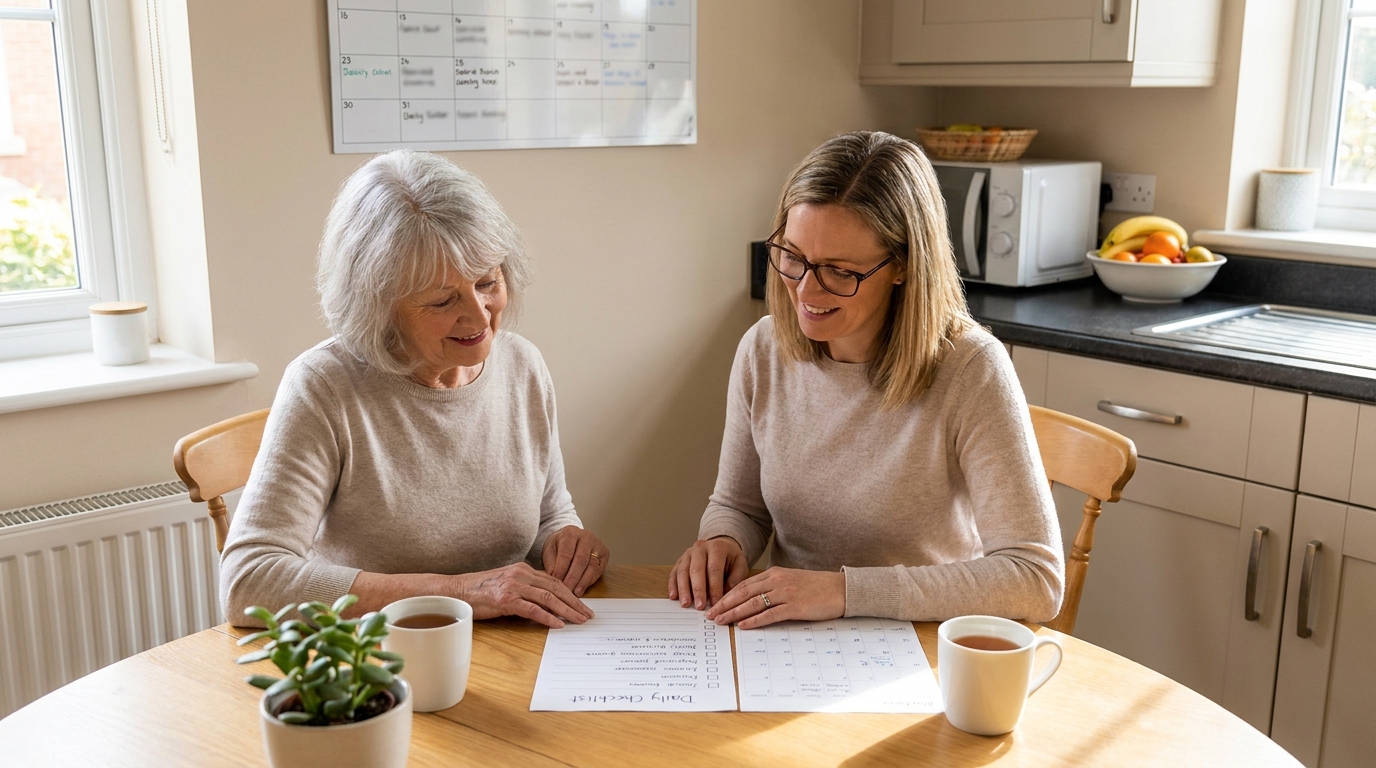
What Does Aging in Place Really Require?
Aging in place usually requires more than a wish to stay home, it requires realistic routines, a safer home setup, reliable support, and a plan that can grow before small problems turn into a crisis. For many families, the real aging in place requirements are not dramatic. They are the everyday basics that help an older adult keep dignity, privacy, and independence while reducing avoidable risks. If you are quietly noticing changes in a parent's home routine, this is often the right time to start aging in place planning in a calm, respectful way.
That can feel especially hard when you do not want to overreact or offend someone you love. Many adult daughters in Houston, Humble, Kingwood, North Houston, Crosby, and nearby communities are carrying that same low-level worry. The good news is that a thoughtful senior care plan does not have to begin with major changes. It can start with simple routines, honest observation, and small layers of elderly support at home.
Overview: what aging in place really means
Aging in place means an older adult continues living at home with enough support, structure, and safety to manage daily life in a sustainable way. It is not just about staying in a familiar house. It is about whether the home life still works well enough, day after day, to support meals, hygiene, mobility, appointments, household tasks, and peace of mind.
If you are in Natalie Whitaker's position, you may not be looking for a big intervention. You may simply be asking yourself whether your mother is still managing well, or whether the signs you are seeing deserve attention. That question matters because the earlier you notice gaps in routine, the more choices your family usually has.
One common misconception is that aging in place only depends on grab bars, a walker, or a medical alert button. Those tools may help, but they are only part of the picture. In real life, aging in place requirements usually include consistent meals, medication reminders, a reasonably clean and navigable home, transportation planning, social contact, and someone noticing when small habits begin to slip.
Aging in place requirements: the daily systems that matter most
When families think about home safety seniors often need, they sometimes picture a one-time home modification checklist. In reality, the most important supports are often routine-based. You are not just evaluating a house. You are evaluating how daily life is functioning inside that house.
1. Reliable daily routines
A home can look fine on the outside while daily structure is quietly falling apart. Aging in place tends to work better when there is a predictable rhythm for waking up, eating, bathing, changing clothes, checking the mail, attending appointments, and winding down for the evening.
- Regular meals and hydration
- Morning and evening check-ins
- A plan for laundry, dishes, and light housekeeping
- Simple reminders for medication schedules, without medication administration
- Transportation or accompaniment for errands and appointments
- Ongoing observation of changes in mood, memory, balance, or judgment
2. A safer physical environment
Home safety matters, but it works best when paired with good routines. Clear walkways, better lighting, reduced clutter, and easier access to bathrooms and commonly used items can lower strain and make the home easier to navigate. Still, even a safer house cannot fully compensate for missed meals, skipped hygiene, increasing confusion, or isolation.
3. Honest awareness of what the older adult can still do well
A dignified plan starts with strengths, not just deficits. Maybe your parent still cooks breakfast, pays bills on time, and enjoys neighborhood walks, but is beginning to struggle with laundry, grocery trips, or remembering the second dose of a medication. That level of detail is what turns vague worry into useful planning.
4. Backup support before an emergency
Many families wait until after a fall, hospitalization, or sudden burnout to add help. But a realistic care plan usually works better when support starts earlier, even lightly. Acting before crisis can preserve more independence because the older adult has more time to adjust on familiar terms.
Early warning signs that home life may need more support
Families often sense that something is off before they can name it. The National Institute on Aging offers helpful guidance on warning signs and first steps for caregivers, and many of those signs show up gradually rather than all at once.
You may be noticing little slips that are easy to explain away on their own. But when several small changes begin clustering together, they can point to a growing gap between living at home and living at home safely.
- Expired food in the refrigerator or a kitchen that is no longer being used much
- Missed bills, unopened mail, or confusion about appointments
- Wearing the same clothes repeatedly or skipping showers
- More clutter, spoiled laundry, or a home that feels harder to keep up
- Bruises, slowed walking, or new hesitation with stairs
- Forgetfulness that affects routines, not just names or dates
- Increased isolation, less interest in hobbies, or fewer outings
- Frequent phone calls about minor problems that used to be manageable
If that list feels familiar, it does not automatically mean your parent cannot stay home. It may mean the current setup needs more structure. This is where practical steps for planning safe aging in place can help families shift from anxiety to a clear next step.
Why small safety slips create so much stress for families
For many adult children, the hardest part is not one major event. It is the steady pressure of uncertainty. You are trying to work, parent, manage your own home, and also keep track of whether your mother is eating enough, answering the phone, or getting unsteady in the shower.
That kind of worry is exhausting because it rarely feels urgent enough to justify a dramatic change, but it also never fully lets go. You may question yourself for weeks. Am I overreacting? Is this normal aging? Will she feel insulted if I bring it up? Those are deeply common questions, and they are one reason families often delay support longer than they want to.
Here is the key point: waiting for certainty can shrink your options. A calm conversation during the early stage often protects dignity better than a rushed decision after a frightening event.
A realistic family micro-story
Consider a common situation. A daughter in Kingwood stops by her mother's home twice in one week and notices the same pot on the stove, unopened mail on the counter, and a missed church ride that never used to happen. Her mother is still conversational, still wants to live at home, and insists she is fine. Nothing looks like a full-blown emergency. But over the next few days, the daughter realizes she is mentally checking her phone all day, worried about what she will find next time.
In that kind of moment, the best first step is often not a big confrontation. It is a simpler plan: a care-needs conversation, a short list of routine gaps, and a trial layer of support that helps without taking over. That can preserve trust while giving the family better information.
What support can look like when you want to start small
Starting small is often the most respectful path. It helps an older adult adjust without feeling that control is being taken away, and it gives families a chance to see what actually reduces stress. In many cases, how companion care can support daily routines is a useful first step because the help feels practical and human, not intrusive.
You do not need to solve everything at once. If you are worried about offending your parent, it can help to frame support around making the week easier, not proving that she cannot manage.
- Short check-ins during the week
- Companionship and conversation that reduce isolation
- Meal planning, grocery support, and meal reminders
- Light housekeeping and laundry help
- Escort support for errands or appointments
- Non-medical medication reminders
- Observation of changing routines that families may not see every day
For families who need examples, this article on practical examples of starting small with in-home help can make the idea feel more concrete.
Start-small support matters because it tests the fit between the older adult, the routine, and the amount of help needed. Sometimes one or two recurring visits a week reveal that the person is doing better than expected. Other times they reveal that more daily living help is needed. Either outcome is useful because it is based on real observation, not guesswork.
How to build a simple senior care plan without making it feel overwhelming
A workable senior care plan does not need to be fancy. It needs to answer a few honest questions clearly enough that the family can act on them. If your current system depends mostly on good intentions, memory, and last-minute favors, it may be time to put more structure around it.
A simple planning process often includes the following:
| Planning area | Questions to ask |
|---|---|
| Meals and hydration | Is food being prepared and eaten regularly? Is the fridge stocked with usable items? |
| Personal routine | Is bathing, dressing, and laundry happening consistently? |
| Mobility and home setup | Are there stairs, clutter, dim hallways, or hard-to-reach essentials? |
| Medication routine | Are reminders enough, or are doses being forgotten despite reminders? |
| Transportation | Who handles errands, appointments, and social outings? |
| Family roles | Who checks in, who notices changes, and who is becoming overloaded? |
| Escalation plan | If routines slip further, what support gets added next? |
This is also where how to build a simple, reliable family care plan can be a helpful deeper read. A plan becomes more reliable when everyone understands the routine, the warning signs, and what happens if the current level of help stops being enough.
For Natalie, the goal is not to create a perfect binder. It is to reduce that constant background fear. Even one short planning conversation this week can make the next month feel more manageable.
How to talk about help without taking away dignity
This may be the part families dread most. If your parent values independence, she may hear the word help as a judgment. That is why tone matters as much as content.
Try leading with what you have noticed and what you want to preserve. For example: “I know staying at home matters to you. I want to support that. I have noticed a few things feel harder lately, and I would love to make the week easier without changing more than we need to.”
That kind of opening keeps the focus on shared goals. It is not about winning an argument. It is about making home life safer and more sustainable on her terms.
It often helps to avoid these common mistakes:
- Bringing up care in the middle of a stressful incident
- Listing every concern at once
- Using language that sounds parental or controlling
- Starting with the most intensive option first
- Treating support as permanent before trying a small routine
Robert “Bob” Ellis: If you are the older adult reading this yourself, help does not have to mean giving up control. In many homes, support works best when it is framed as help on your terms, with routines that protect privacy and independence rather than replace them.
What operational clarity can look like for families
Once a family decides to explore support, practical questions matter. What gets discussed first? How does scheduling work? What happens if needs change over time? These are healthy questions, not overthinking.
Marcus Reed: If you are the person in the family who wants operational clarity, a good next conversation usually covers intake, routine needs, preferred schedule windows, personality fit, and how concerns are communicated if a change is noticed. Clear escalation paths matter because aging in place planning works better when support can scale gradually instead of resetting from scratch each time the situation changes.
Caroline Hayes: If local accountability and caregiver fit matter most to you, pay attention to how respectfully onboarding is handled, how preferences are discussed, and whether the process feels grounded in the family's actual routine. Families in the Houston area often feel more at ease when support is explained in practical terms rather than broad promises.
Respite is part of the plan, not a sign that you are failing
Sometimes a spouse or adult child has been quietly holding everything together for so long that the care plan only focuses on the older adult. But a realistic plan also considers the person doing the helping. Exhaustion changes judgment, patience, health, and safety.
Renee Alvarez: If you are caring for a spouse, respite is not stepping away from love. Relief can protect the relationship, reduce tension at home, and make it easier to keep going without resentment or burnout.
Local families may also want to review local caregiver support and respite resources in Harris County as part of a broader support picture. Even when a family is mostly managing on its own, knowing what community resources exist can reduce pressure.
How to compare aging in place options realistically
Not every family needs the same type of support. The right fit depends on what daily living help is missing, how much oversight is needed, and how the older adult responds to change. In-home support can be a strong option when the main goals are routine, companionship, household help, reminders, and observation of changes in day-to-day functioning.
As you compare options, it may help to ask:
- What problem are we actually trying to solve right now?
- Which tasks are slipping first?
- Would short recurring visits help, or is more frequent support needed?
- How comfortable is the older adult with outside help?
- What signs would tell us it is time to add another layer of support?
You do not have to predict the entire future. You just need a realistic next step and a way to reassess after the first week or two, then again over the next month as patterns become clearer.
What families ask about aging in place requirements
When is the right time to start aging in place planning?
The right time is usually when you first notice repeated changes in routine, safety, or judgment, not after a major crisis. Early planning often preserves more choice because the older adult can help shape support before decisions feel rushed.
Does needing help at home mean someone can no longer live independently?
No. Many people remain at home with added structure and non-medical support. Independence often depends less on doing every task alone and more on having the right help to keep daily life stable and safe.
What kind of daily living help is usually included in non-medical support?
Non-medical support may include companionship, meal help, light housekeeping, laundry, transportation support, personal care assistance, and medication reminders. It does not mean clinical treatment, nursing care, or medication administration.
What if my parent resists any idea of care?
Resistance is common, especially when help sounds like loss of control. A better first step is often a smaller conversation focused on comfort, routine, and preserving life at home, followed by a low-pressure trial rather than a major commitment.
How do families know whether a plan is actually working?
A plan is usually working when the home routine becomes more predictable, the family feels less constant anxiety, and the older adult is managing daily life with fewer gaps. Reviewing the first week or two honestly can show whether support should stay the same, increase, or shift.
Closing guidance: act before crisis, while choices are still wider
The clearest answer to what aging in place really requires is this: it requires a home routine that still works, a support system that notices change, and a plan that can grow without taking away dignity. Most families do not need to begin with a dramatic decision. They need a calm look at daily life, a respectful conversation, and a practical first layer of help.
If you have been carrying quiet concern about a parent in Houston, Humble, Kingwood, North Houston, Crosby, or nearby, it may help to stop asking whether things are “bad enough” and start asking what support would make home life steadier. That shift often reduces guilt and opens better options.
When families want a low-pressure next step, it can help to talk through what is being noticed, compare options, and understand what support could look like now versus later. For local context, some readers also review local Assisting Hands Houston information and map listing as part of that process. The important thing is not to wait for a frightening event to force the conversation. Talk through what you’re noticing.
Assisting Hands Houston
1250 Indiana St., Humble, TX 77396
https://assistinghands.com/21/texas/humble/
+1 281-540-7400
View on Google Maps

No comments:
Post a Comment